Newsstand Period 1922 - 1955
 In August of 1943 came what is believed to be the first horror
comic, but from an unlikely source. Classic Comics #13 had the story of
Dr. Jekyll and Mr. Hyde. They would also publish Frankenstein in
December of 1945 (issue #26). It should be mentioned that the story of
the Headless Horseman was part of issue #12. These two comics would set
us on the road for some rough times in the future. But they alone were
not responsible. There will be more on the upcoming horror genre as it happens.
In August of 1943 came what is believed to be the first horror
comic, but from an unlikely source. Classic Comics #13 had the story of
Dr. Jekyll and Mr. Hyde. They would also publish Frankenstein in
December of 1945 (issue #26). It should be mentioned that the story of
the Headless Horseman was part of issue #12. These two comics would set
us on the road for some rough times in the future. But they alone were
not responsible. There will be more on the upcoming horror genre as it happens.
 In October, 1943 a new publisher called Creston Comics would start up
publishing Giggle Comics and Ha Ha Comics. Both titles would
go 101 issues ending in 1955, but both titles changed their names for
the last two issues. These titles were among the now typical funny
animal comics genre. During WWII both of these books were selling
500,000 copies each month, which was the highest point for this
company. Creston Comics sprung up from the Sangor shop. Ben Sangor began
producing promotional comics in 1941 and moved to newsstand comics with
the help of investors. The names of Gerald and Andrew Albert were on paper
as the official owners. They named the company
Creston because that was the street the Alberts grew up on. In 1944 the
Alberts would transfer their share of the company to Harry Donenfeld and
very prolific writer and editor Richard E. Hughes would handle much of the business.
The company would become American Comics Group
(ACG) in 1946 and would be better known under that name.
In October, 1943 a new publisher called Creston Comics would start up
publishing Giggle Comics and Ha Ha Comics. Both titles would
go 101 issues ending in 1955, but both titles changed their names for
the last two issues. These titles were among the now typical funny
animal comics genre. During WWII both of these books were selling
500,000 copies each month, which was the highest point for this
company. Creston Comics sprung up from the Sangor shop. Ben Sangor began
producing promotional comics in 1941 and moved to newsstand comics with
the help of investors. The names of Gerald and Andrew Albert were on paper
as the official owners. They named the company
Creston because that was the street the Alberts grew up on. In 1944 the
Alberts would transfer their share of the company to Harry Donenfeld and
very prolific writer and editor Richard E. Hughes would handle much of the business.
The company would become American Comics Group
(ACG) in 1946 and would be better known under that name.
In 1947 the ACG started a sub-company called B & I
Publishing. It was co-owned by Ben W. Sangor and Frederick Iger. Ben
had been a long time friend of Harry Donenfeld, the two played Gin
Rummy together on a regular basis and would also travel together.
Fred Iger was working for Donenfeld under his radio department. He
would marry Donenfeld's daughter Sonya, who due to family was a co-owner of DC
Comics. As a result of the marriage Fred would also be a co-owner of DC Comics. In
order to "keep peace in the family" Donenfeld would fund Frederick
Iger’s partnership with Ben Sangor and he would become a co-owner of
ACG. While Sangor worked on the office and creative work for the
company, Iger was learning the ropes through this company. He was the
business manager for ACG and co-owned the sub-company B & I. While
there he learned about editing, getting newsprint, negotiating with
printers and doing the taxes for a comic book publisher. There was a
few other sub-publishing companies created for tax purposes.
ACG’s comics were distributed by Independent News (again,
owned by Donenfeld) and some DC Comics had ads for the companies
titles.
In 1948 ACG drastically cut down on production as they had a
couple of years worth of comic book in storage and the books were
starting to lose money. Sangor died in 1955 of a heart attack. Some people believed that
after Sangor's death the ACG would be given to Sangor’s long time employee Richard
Hughes, but Sangor left no will stating this. Instead Frederick Iger
and Harry Donenfeld bought the other half of the company from Sangor
widow. Despite the usual sub-standard output the company would
continue doing newsstand comics until 1967, surviving long after most
publishers of this period went down.
Behind the Scenes - Who was that Man?
Credits for creators was one thing,
how about credit for an editor? Richard Hughes was known for editing
the ACG line and contributing a lot of the writing. He did so under a
wide variety of names. What many don’t know that his professional name
of Richard Hughes was also a fake. His real name was Leo Rosenbaum.
Behind the Scenes - That’s one way out of comics.
ACG editor Richard Hughes had an
assistant editor named Norman Fruman. His passions were 19th Century
English Literature and baseball. He got onto the $64,000 Question game
show and won $48,000. He quit his job at ACG and went into teaching.
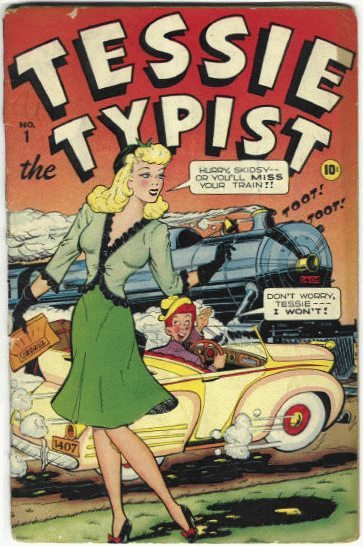
 In the summer of 1944 Marvel started doing comics about working
women. They began with Tessie the Typist. It went 23 issues, ending in
1949. Included in the back up stories of these comics was work by Basil
Wolverton (Powerhouse Pepper) and Harvey Kurtzman (Hey Look!) Both of
these artists had zany styles that would have a lasting impact. Their short works
were found in a variety of Marvel Comics of this period. While
Tessie didn’t do that great for Marvel it was the first of an working girl genre that
would soon have huge success for them in the near future.
In the summer of 1944 Marvel started doing comics about working
women. They began with Tessie the Typist. It went 23 issues, ending in
1949. Included in the back up stories of these comics was work by Basil
Wolverton (Powerhouse Pepper) and Harvey Kurtzman (Hey Look!) Both of
these artists had zany styles that would have a lasting impact. Their short works
were found in a variety of Marvel Comics of this period. While
Tessie didn’t do that great for Marvel it was the first of an working girl genre that
would soon have huge success for them in the near future.
Just to give you an idea of what was really popular vs. what wasn't I made another chart
showing the sales of various titles in September of 1944.
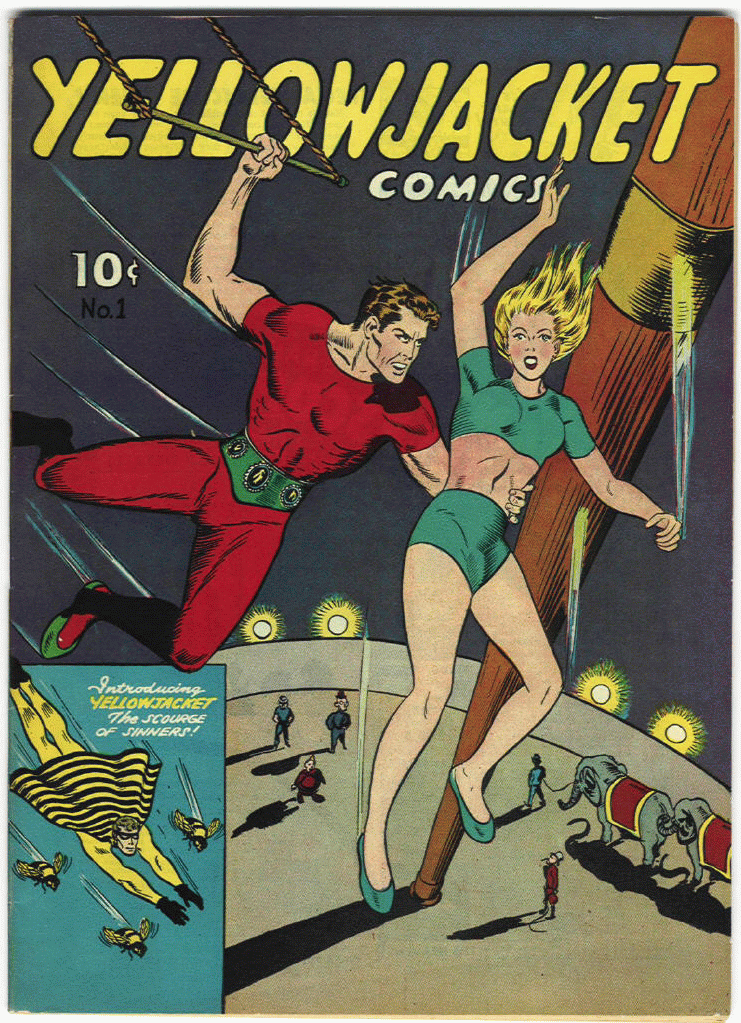
 The Horror genre would continue when Yellowjacket Comics #1 was
published under the name of E. Levy. The first issue was cover dated September 1944. Yellowjacket
Comics was a normal superhero title, but in the back pages of the first issue they adapted Edgar Allan
Poe's The Black Cat, which is a horror tale. They did more of them and would eventually create a horror
feature called Tales of Terror narrated by an old witch. This is an idea that would be used again later
with a greater effect. The comic would only go 10 issues though. The comic would also switch it's
publishing name to Frank Comunale and then Charlton Comics. Despite the name changes it's likely that
this comic was done by the Charlton Comics owners all along and may very well be their first foray into the
comic book field.
The Horror genre would continue when Yellowjacket Comics #1 was
published under the name of E. Levy. The first issue was cover dated September 1944. Yellowjacket
Comics was a normal superhero title, but in the back pages of the first issue they adapted Edgar Allan
Poe's The Black Cat, which is a horror tale. They did more of them and would eventually create a horror
feature called Tales of Terror narrated by an old witch. This is an idea that would be used again later
with a greater effect. The comic would only go 10 issues though. The comic would also switch it's
publishing name to Frank Comunale and then Charlton Comics. Despite the name changes it's likely that
this comic was done by the Charlton Comics owners all along and may very well be their first foray into the
comic book field.
Charlton was started by two ex-convicts named John Santangelo and Edward Levy.
Santangelo was an Italian immigrant who worked as a brick layer and masonry contractor. He first began
publishing unauthorized lyrics to famous songs (for his soon to be wife) and made enough to quit his
job. He would discover the hard way that America had copyright laws and would end up in the slammer.
While there he met Edward Levy who was a disbarred attorney who was involved in a billing scandal. The
two became friends, got out of prison at roughly the same time and made a handshake deal to go into
legit publishing together. Edward was able to get the rights to publish lyrics legally and John would
hire people and handle the publishing aspect. The company would buy an old printing press that was
typically used to print cereal boxes and would also set up their own distribution network. This made
Charlton Comics quite unique as they were very much a "done in one" publisher. They did everything
from buying the paper to print on, hiring the people to create the magazines, to delivering the magazines to the newsstands. But like any printing
presses, it cost a lot of money to not have the presses rolling, it's very likely that they got into
comic books as a way to print something in between their magazine runs. No doubt they probably also
recognized the popularity of comic books and were hoping to cash in.
Charlton would continue as a company until 1991, but would
discontinue their comic books by 1986. Because of their done in one structure they managed to survive
the economic downturns that put many other publishers out of business. They would be known for buying,
then selling popular titles and characters. Charlton was also known for paying freelancers the lowest
page rates and usually getting substandard material. On the plus side for freelancers, there was never
a shortage of work and they were free to write & draw whatever they wanted. The company owners
didn't pay attention to the comics or cared about them, just as long as they weren't losing major money.
This gave the freelancers the creative freedom some of them craved for. Many major freelancers would
tend to work at Charlton between gigs when they switched between the larger publishers. Also a number
of freelancers would get their start at Charlton and would go onto bigger and better things.
Behind the Scenes - Let's play some Ping Pong!
Charlton was also known for something else. They had a ping pong table that they let their comic book
employee's play whenever they wanted. Because they were getting paid pretty much by piecemeal they would work to grind out as much stuff
as possible and then take breaks and play a lot of ping pong.
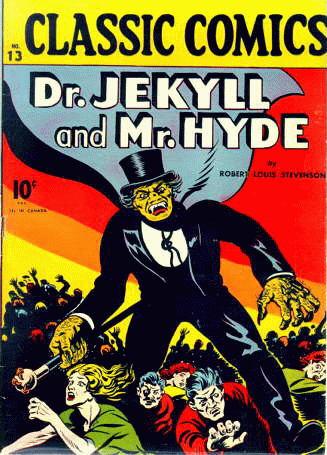 In August of 1943 came what is believed to be the first horror
comic, but from an unlikely source. Classic Comics #13 had the story of
Dr. Jekyll and Mr. Hyde. They would also publish Frankenstein in
December of 1945 (issue #26). It should be mentioned that the story of
the Headless Horseman was part of issue #12. These two comics would set
us on the road for some rough times in the future. But they alone were
not responsible. There will be more on the upcoming horror genre as it happens.
In August of 1943 came what is believed to be the first horror
comic, but from an unlikely source. Classic Comics #13 had the story of
Dr. Jekyll and Mr. Hyde. They would also publish Frankenstein in
December of 1945 (issue #26). It should be mentioned that the story of
the Headless Horseman was part of issue #12. These two comics would set
us on the road for some rough times in the future. But they alone were
not responsible. There will be more on the upcoming horror genre as it happens.