Newsstand Period 1922 - 1955
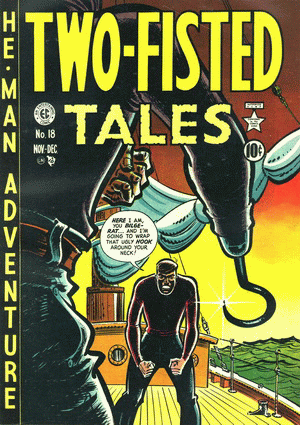 EC again made changes to the industry with a two War titles. The
titles were called Two Fisted Tales (#18) and
Front Line Combat (#1).
They started in December of 1950 and July of 1951 respectively. These two titles
were edited by Harvey Kurtzman who also contributed his writing and
artistic talents to them. They featured stories of War from a variety
of different time periods and points of view. Only constant in these
tales was the moral. War is ugly. Unlike previous war comics, Kurtzman
did not produce jingoistic propaganda supporting the war effort.
Kurtzman was very focused on getting the itty bitty details correct on
these tales of war. He often took his freelancers to museums so they
could see uniforms, equipment and weapons for themselves. When the
United States began its police action in Korea (also known as the
Korean War) the old style War Comics came back with little success.
The comics that were successful were those that followed, in part,
the Kurtzman titles.
EC again made changes to the industry with a two War titles. The
titles were called Two Fisted Tales (#18) and
Front Line Combat (#1).
They started in December of 1950 and July of 1951 respectively. These two titles
were edited by Harvey Kurtzman who also contributed his writing and
artistic talents to them. They featured stories of War from a variety
of different time periods and points of view. Only constant in these
tales was the moral. War is ugly. Unlike previous war comics, Kurtzman
did not produce jingoistic propaganda supporting the war effort.
Kurtzman was very focused on getting the itty bitty details correct on
these tales of war. He often took his freelancers to museums so they
could see uniforms, equipment and weapons for themselves. When the
United States began its police action in Korea (also known as the
Korean War) the old style War Comics came back with little success.
The comics that were successful were those that followed, in part,
the Kurtzman titles.
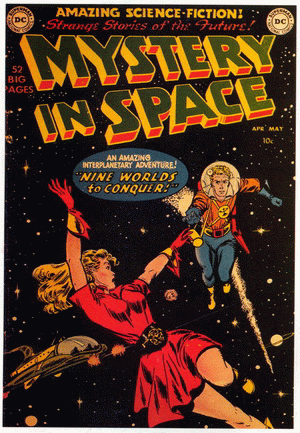 The rest of 1951 saw many other publishers do horror and sci-fi
comics to compete with EC Comics. Among the longest of these titles were
DC’s Mystery in Space (May 1951),
House of Mystery (December 1951),
Marvels Strange Tales (June 1951)
and Journey Into Mystery (June 1952).
Mystery in Space would go 117 issues, ending in 1981. It should be said
that issue #110 was released in 1966 and #111 in 1980. House of Mystery
had a very impressive run, going 30 years and ending with issue #321 in 1983. This title would be more
like the EC horror comics in that it had a host by the name of Cain that introduced the stories. It would
be filled with a variety of suspense/horror stories.
Strange Tales would go 168 issues ending in 1968, then continuing with #169 to #188
between 1973 and 1976. Journey Into Mystery would go 125 issues before
changing it's title to reflect the superhero that took over the main feature.
These titles would have a mix of stories going from weird/suspense/horror and sci-fi.
They were done by a variety of talent, with nothing remaining the same. Superheroes
would be used in these titles in the 60’s and remain in them until they ended.
The rest of 1951 saw many other publishers do horror and sci-fi
comics to compete with EC Comics. Among the longest of these titles were
DC’s Mystery in Space (May 1951),
House of Mystery (December 1951),
Marvels Strange Tales (June 1951)
and Journey Into Mystery (June 1952).
Mystery in Space would go 117 issues, ending in 1981. It should be said
that issue #110 was released in 1966 and #111 in 1980. House of Mystery
had a very impressive run, going 30 years and ending with issue #321 in 1983. This title would be more
like the EC horror comics in that it had a host by the name of Cain that introduced the stories. It would
be filled with a variety of suspense/horror stories.
Strange Tales would go 168 issues ending in 1968, then continuing with #169 to #188
between 1973 and 1976. Journey Into Mystery would go 125 issues before
changing it's title to reflect the superhero that took over the main feature.
These titles would have a mix of stories going from weird/suspense/horror and sci-fi.
They were done by a variety of talent, with nothing remaining the same. Superheroes
would be used in these titles in the 60’s and remain in them until they ended.
 In 1951 Timely Comics owner Martin Goodman decided to cut out his
distributor Kable News and form his own distribution company. He called
it Atlas and that was the name that went on all his comic books as well.
It should be said that many titles went under different company names for tax purposes. But
from here on out, Timely Comics are now typically called Atlas Comics within the comic book community.
The real name for the company was Magazine Management Inc. The comic books were a small part of
what Martin Goodman published. He also published a lot of magazines and pulp books. The company name
would later change again to Marvel Comics.
In 1951 Timely Comics owner Martin Goodman decided to cut out his
distributor Kable News and form his own distribution company. He called
it Atlas and that was the name that went on all his comic books as well.
It should be said that many titles went under different company names for tax purposes. But
from here on out, Timely Comics are now typically called Atlas Comics within the comic book community.
The real name for the company was Magazine Management Inc. The comic books were a small part of
what Martin Goodman published. He also published a lot of magazines and pulp books. The company name
would later change again to Marvel Comics.
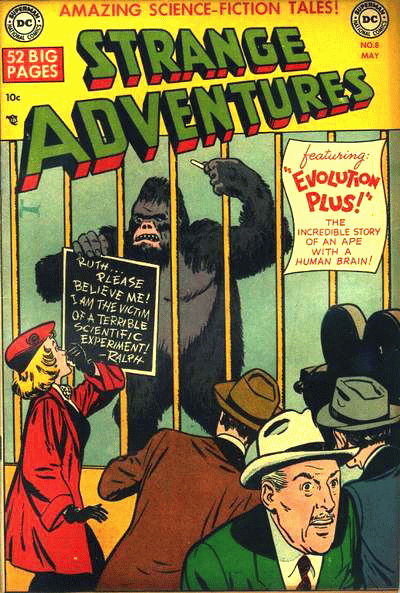
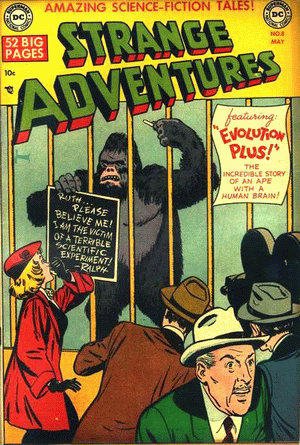 Something odd happened in 1951, DC did Strange Adventures #8
which had a gorilla on the cover. The sales on the title did a major
spike. DC figured it had to be the gorilla and it was. Other covers
were done with a gorilla on them and their sales spiked too. Suddenly
every editor wanted to have a gorilla on their cover every month. DC’s
management had to put their foot down and limit the company to a 1 gorilla
cover a month. Along the way the company found that if the gorilla was
either A) talking or B) purple the sales spiked even more. This would
later inspire a super villain called Gorilla Grodd who was a super
smart talking purple Gorilla. He regularly appeared in Flash Comics.
Other cover elements that caused sales to jump would be either young
boys or superheroes crying.
Something odd happened in 1951, DC did Strange Adventures #8
which had a gorilla on the cover. The sales on the title did a major
spike. DC figured it had to be the gorilla and it was. Other covers
were done with a gorilla on them and their sales spiked too. Suddenly
every editor wanted to have a gorilla on their cover every month. DC’s
management had to put their foot down and limit the company to a 1 gorilla
cover a month. Along the way the company found that if the gorilla was
either A) talking or B) purple the sales spiked even more. This would
later inspire a super villain called Gorilla Grodd who was a super
smart talking purple Gorilla. He regularly appeared in Flash Comics.
Other cover elements that caused sales to jump would be either young
boys or superheroes crying.
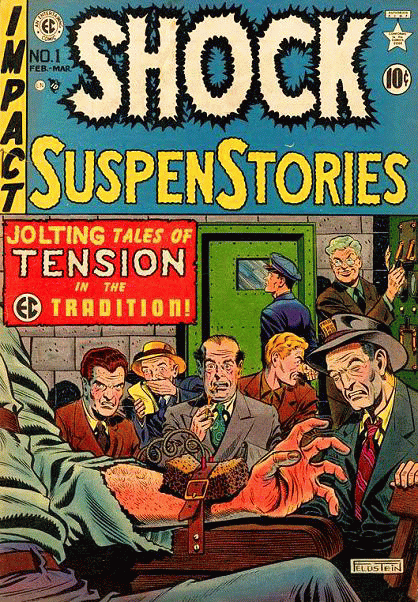
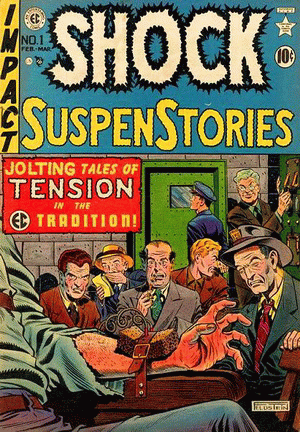 EC also tackled serious social issues within comic books. They
did this with a February 1952 title called Shock SuspenStories.
Starting with issue #1 it went 55 issues until EC decided to quit
publishing comic books due to the comic industry forcing him out of
business. Among the topics covered were racism and drug addition, often
done with shocking covers. While this title made these types of stories their focus,
you could find similar stories sprinkled throughout EC's line of comics.
EC also tackled serious social issues within comic books. They
did this with a February 1952 title called Shock SuspenStories.
Starting with issue #1 it went 55 issues until EC decided to quit
publishing comic books due to the comic industry forcing him out of
business. Among the topics covered were racism and drug addition, often
done with shocking covers. While this title made these types of stories their focus,
you could find similar stories sprinkled throughout EC's line of comics.
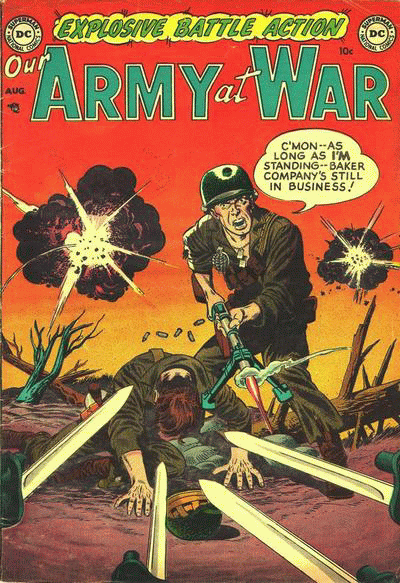
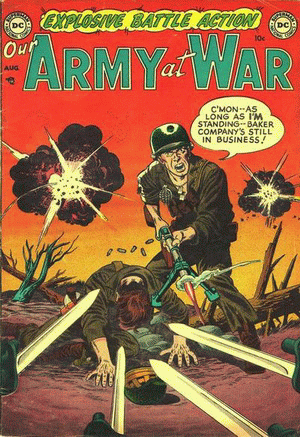 In 1952 other publishers also got involved with War Comics again.
This was partially because of the Korean Police Action (i.e. Korean War) and
the success of EC’s war titles. The most
successful War Comic to come out in this year would be DC Comics Our
Army At War, which first appeared in August 1952. This title would be
responsible for introducing several popular war characters among them
Sgt. Rock, Enemy Ace and Unknown Soldier. The two people most
associated with this title are editor/writer Robert Kanigher and
writer/artist Joe Kubert. Robert was a very gruff, in your face, blunt
editor. He believed if you asked the talent to do the impossible they’d
kill themselves trying to do it and he’d get the best work out of them.
His personality was perfect for the War titles that DC was doing as
those characteristics were popular in war heroes at the time. Joe
Kubert is a great artist who would influence and continue to work in
the comic industry for many years to come. He would set up a comic book
school in the 70’s that many creators would go to and then head off for
professional work. Kubert would also continue to produce
critically acclaimed graphic novels.
In 1952 other publishers also got involved with War Comics again.
This was partially because of the Korean Police Action (i.e. Korean War) and
the success of EC’s war titles. The most
successful War Comic to come out in this year would be DC Comics Our
Army At War, which first appeared in August 1952. This title would be
responsible for introducing several popular war characters among them
Sgt. Rock, Enemy Ace and Unknown Soldier. The two people most
associated with this title are editor/writer Robert Kanigher and
writer/artist Joe Kubert. Robert was a very gruff, in your face, blunt
editor. He believed if you asked the talent to do the impossible they’d
kill themselves trying to do it and he’d get the best work out of them.
His personality was perfect for the War titles that DC was doing as
those characteristics were popular in war heroes at the time. Joe
Kubert is a great artist who would influence and continue to work in
the comic industry for many years to come. He would set up a comic book
school in the 70’s that many creators would go to and then head off for
professional work. Kubert would also continue to produce
critically acclaimed graphic novels.
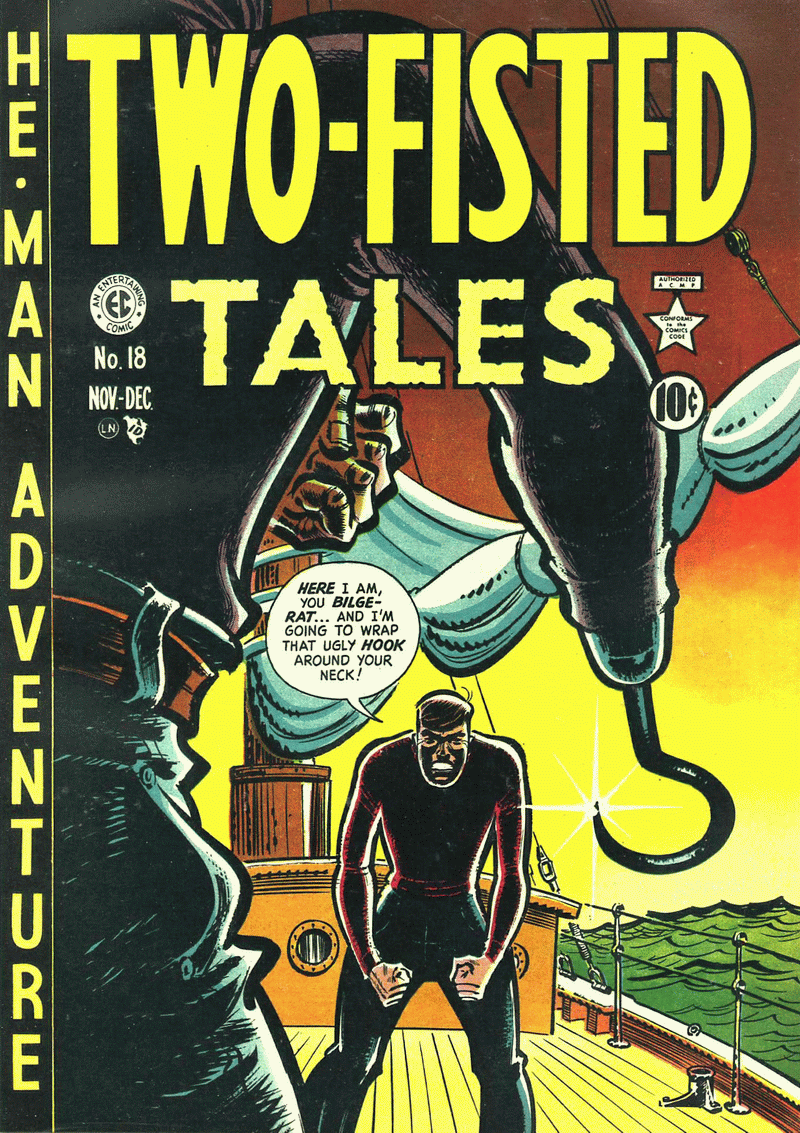 EC again made changes to the industry with a two War titles. The
titles were called Two Fisted Tales (#18) and
Front Line Combat (#1).
They started in December of 1950 and July of 1951 respectively. These two titles
were edited by Harvey Kurtzman who also contributed his writing and
artistic talents to them. They featured stories of War from a variety
of different time periods and points of view. Only constant in these
tales was the moral. War is ugly. Unlike previous war comics, Kurtzman
did not produce jingoistic propaganda supporting the war effort.
Kurtzman was very focused on getting the itty bitty details correct on
these tales of war. He often took his freelancers to museums so they
could see uniforms, equipment and weapons for themselves. When the
United States began its police action in Korea (also known as the
Korean War) the old style War Comics came back with little success.
The comics that were successful were those that followed, in part,
the Kurtzman titles.
EC again made changes to the industry with a two War titles. The
titles were called Two Fisted Tales (#18) and
Front Line Combat (#1).
They started in December of 1950 and July of 1951 respectively. These two titles
were edited by Harvey Kurtzman who also contributed his writing and
artistic talents to them. They featured stories of War from a variety
of different time periods and points of view. Only constant in these
tales was the moral. War is ugly. Unlike previous war comics, Kurtzman
did not produce jingoistic propaganda supporting the war effort.
Kurtzman was very focused on getting the itty bitty details correct on
these tales of war. He often took his freelancers to museums so they
could see uniforms, equipment and weapons for themselves. When the
United States began its police action in Korea (also known as the
Korean War) the old style War Comics came back with little success.
The comics that were successful were those that followed, in part,
the Kurtzman titles.