Newsstand Period 1922 - 1955
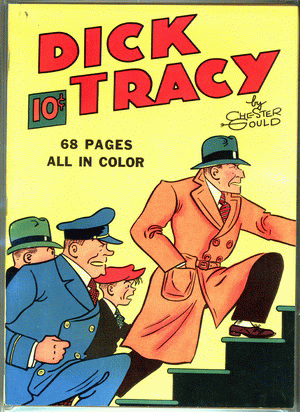 In fall of 1939, Four Color Comics by Dell Publishing would
start. The first issue would feature the famous Dick Tracy and the
series would continue from there. It used very famous characters from
movies, TV shows, cartoons and comic strips. At its peak it during the
1950's new Four Color books was coming out twice a week. Four Color
Volume 1 would last 25 issues, and in 1942 the numbering restarted with
volume 2, #1 stretched 1354 issues! I should add that
sometimes the issues would skip a number. The title ended in 1962 when
Western Printing and Lithographing Co., decided to cut out Dell and
publish themselves through the name of Gold Key. They would later
publish under the name of Whitman which was known for coloring books.
In fall of 1939, Four Color Comics by Dell Publishing would
start. The first issue would feature the famous Dick Tracy and the
series would continue from there. It used very famous characters from
movies, TV shows, cartoons and comic strips. At its peak it during the
1950's new Four Color books was coming out twice a week. Four Color
Volume 1 would last 25 issues, and in 1942 the numbering restarted with
volume 2, #1 stretched 1354 issues! I should add that
sometimes the issues would skip a number. The title ended in 1962 when
Western Printing and Lithographing Co., decided to cut out Dell and
publish themselves through the name of Gold Key. They would later
publish under the name of Whitman which was known for coloring books.
Lloyd Jacquet was an editor
for Wheeler-Nicholson’s National
Allied Publications and later Centaur Publications. In 1939 he resigned
from the company and with Jack Binder started comic "shop" with a crew
of artists that worked for Centaur. They called this shop Funnies Inc.
Among the artists were Art Director Bill Everett, Carl Burgos, Paul
Gustavson, Tom Dixon, Raymond Gill, Al Anders, and Ben Thompson. The
"shop" made comics like a factory made cars. Artists took turns doing
Layouts, Pencils on the main figures, pencils on secondary figures,
inks on the main figures, inks on secondary figures, then they would be
lettered with the script.
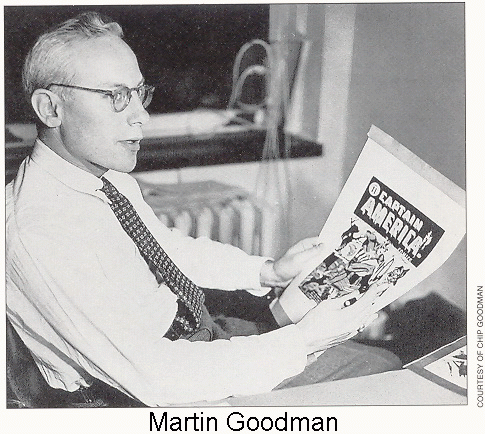
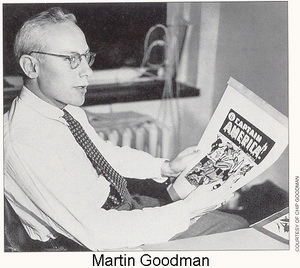
 Funnies Inc. salesman Frank
Torpey convinced Sci-Fi pulp
publisher Martin Goodman to publish comics with Funnies Inc. doing the
material. Out came Marvel Comics #1 (Oct.-Nov. 1939) the company’s
first book. Inside had a number of heroes, the longest lasting one
would be Prince Namor the Sub-Mariner. He was created by Bill Everett.
This character would first be done for a giveaway comic that never got
off the ground. It was supposed to get people to go to the movies
during the depression. It was called
Motion Pictures Funnies Weekly;
most of the work in that comic is humor except for the Sub-Mariner
story which is said to be very violent in comparison. Namor (Roman
spelled backwards) was a cross breed with a Human father and Atlantian
princess. Thus he was able to breathe both air and water, but he grew
up under water and was the prince of Atlantis. Unique to Atlantians
Namor had super strength and could fly. Sometimes he would emulate
"powers" of a fish, like becoming Electric as an Eel. He was the first
anti-hero often fighting the forces of law and order for a higher
purpose. We humans had been dumping garbage and exploding bombs in his
backyard and he wasn’t happy about it. His stories were sometimes about him getting
revenge against the surface world. Come WWII he would join forces with
the Allied Powers and fight the Nazi’s. The character still appears in
Marvel Comic’s today and gets a dedicated series from time to time.
Funnies Inc. salesman Frank
Torpey convinced Sci-Fi pulp
publisher Martin Goodman to publish comics with Funnies Inc. doing the
material. Out came Marvel Comics #1 (Oct.-Nov. 1939) the company’s
first book. Inside had a number of heroes, the longest lasting one
would be Prince Namor the Sub-Mariner. He was created by Bill Everett.
This character would first be done for a giveaway comic that never got
off the ground. It was supposed to get people to go to the movies
during the depression. It was called
Motion Pictures Funnies Weekly;
most of the work in that comic is humor except for the Sub-Mariner
story which is said to be very violent in comparison. Namor (Roman
spelled backwards) was a cross breed with a Human father and Atlantian
princess. Thus he was able to breathe both air and water, but he grew
up under water and was the prince of Atlantis. Unique to Atlantians
Namor had super strength and could fly. Sometimes he would emulate
"powers" of a fish, like becoming Electric as an Eel. He was the first
anti-hero often fighting the forces of law and order for a higher
purpose. We humans had been dumping garbage and exploding bombs in his
backyard and he wasn’t happy about it. His stories were sometimes about him getting
revenge against the surface world. Come WWII he would join forces with
the Allied Powers and fight the Nazi’s. The character still appears in
Marvel Comic’s today and gets a dedicated series from time to time.
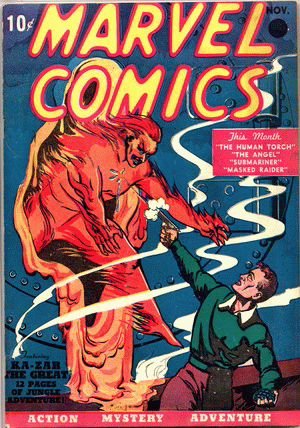
 The hero to appear on the
cover of Marvel Comics #1 was The Human
Torch. He was created by Carl Burgos. Despite the "Human" name the
Human Torch was an android who looked and acted human. His could burst
into flame, fly and shoot and control flame from his body. This
character would also be continually used by Marvel. He would be later
redone as a teenager, and then brought back as the original character.
Other heroes to appear in here are the Angel and Ka-Zar. Angel had
wings and flew, Ka-Zar was a jungle man like Tarzan. Both names and
ideas behind them would later be used for new characters but that’s
where the similarity ends. Among the early writers for Marvel Comics
would be Mickey Spillane who would go on to sell millions of Mike
Hammer books.
The hero to appear on the
cover of Marvel Comics #1 was The Human
Torch. He was created by Carl Burgos. Despite the "Human" name the
Human Torch was an android who looked and acted human. His could burst
into flame, fly and shoot and control flame from his body. This
character would also be continually used by Marvel. He would be later
redone as a teenager, and then brought back as the original character.
Other heroes to appear in here are the Angel and Ka-Zar. Angel had
wings and flew, Ka-Zar was a jungle man like Tarzan. Both names and
ideas behind them would later be used for new characters but that’s
where the similarity ends. Among the early writers for Marvel Comics
would be Mickey Spillane who would go on to sell millions of Mike
Hammer books.
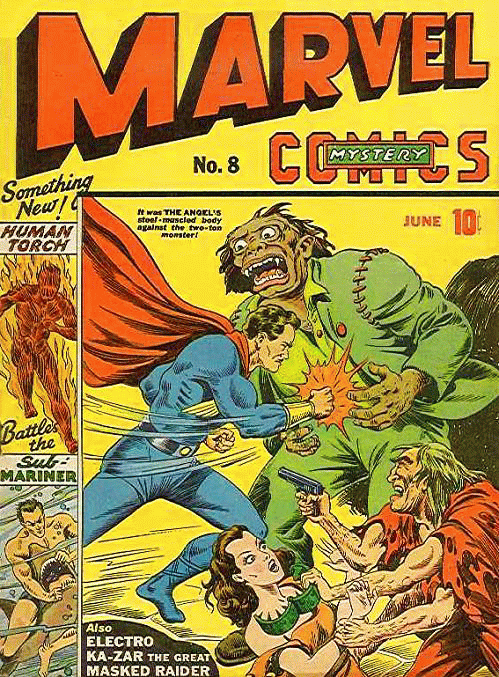
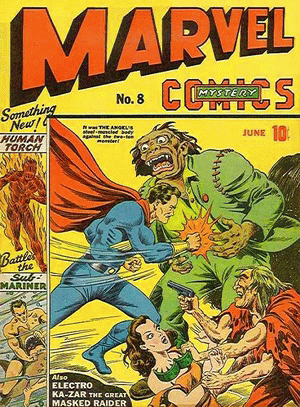 Marvel Comics would do
something new with issues #8 - 10 (1940) of
Marvel Mystery Comics. They would have the two main characters, Namor
and the Torch, fight against each other. It was the classic battle of
fire vs. water. Namor of course played the bad guy and the two fought
to a stalemate with neither side winning. They would do it again in
issue #5
(1941) and #8 (1942)
of the Human Torch series. The #5 issue is interesting in because the story
took the entire comic, which was unique because virtually all comics at
this time used a number of short stories in them. The 60 page story was
done in a few days with a slew of writers and artists all working in
Bill Everett’s apartment, taking turns working pretty much 24 hours a
day to get it done.
Marvel Comics would do
something new with issues #8 - 10 (1940) of
Marvel Mystery Comics. They would have the two main characters, Namor
and the Torch, fight against each other. It was the classic battle of
fire vs. water. Namor of course played the bad guy and the two fought
to a stalemate with neither side winning. They would do it again in
issue #5
(1941) and #8 (1942)
of the Human Torch series. The #5 issue is interesting in because the story
took the entire comic, which was unique because virtually all comics at
this time used a number of short stories in them. The 60 page story was
done in a few days with a slew of writers and artists all working in
Bill Everett’s apartment, taking turns working pretty much 24 hours a
day to get it done.
Behind the Scenes - Hey! That’s not Funny!
Martin Goodman decided to try and do
comic books without the use of Funnies Inc. He
got their top creators to work directly for him and also hired others
like Joe Simon and Jack Kirby. Lloyd Jacquet said Martin eventually
made his pipsqueak cousin in law the editor and cut his shop out.
Jacquet became very bitter towards Martin Goodman as a result. Oh, and
as for the pipsqueaks name? Stanley Lieber, better known as Stan Lee.
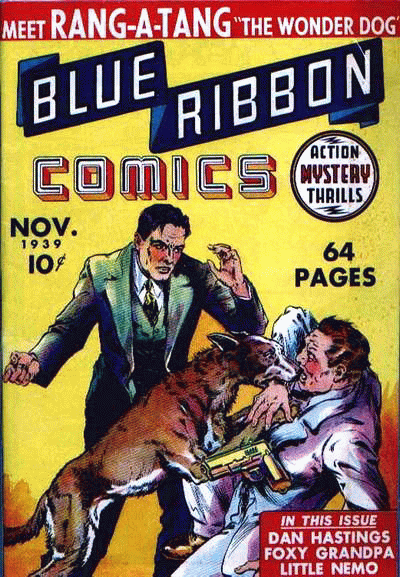
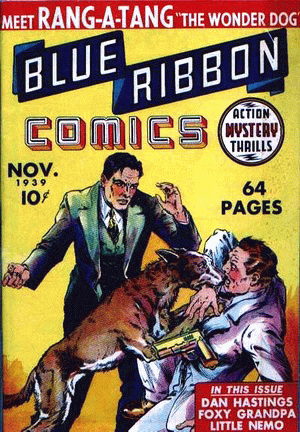 In November of 1939 Blue
Ribbon Comics made the debut of a new
company called MLJ Magazines. MLJ stood for the first initial of the
three partners running it, Maurice Coyne (M), Louis Silberkleit (L) and
John Goldwater (J). While this comic isn’t all that significant the
company would become one of the few to survive over the years. You will
read more about them as time goes along.
In November of 1939 Blue
Ribbon Comics made the debut of a new
company called MLJ Magazines. MLJ stood for the first initial of the
three partners running it, Maurice Coyne (M), Louis Silberkleit (L) and
John Goldwater (J). While this comic isn’t all that significant the
company would become one of the few to survive over the years. You will
read more about them as time goes along.
Did You Know? - Owner of Timely Comics and part
owner of MLJ magazines had worked together previously. Both Martin
Goodman and Louis Silberkleit worked for Hugo Gernsbeck doing pulp
novels. Both of them would end up becoming pulp novel publishers before
getting into comics. In fact, the vast majority of the early comic book
publishers did pulp books (and some 'under the counter' Girlie Magazines) for years and decided to
give this new thing called comics a try. Little did these two know it would become the only
part of their multi-facet corporations to survive 60 years later.
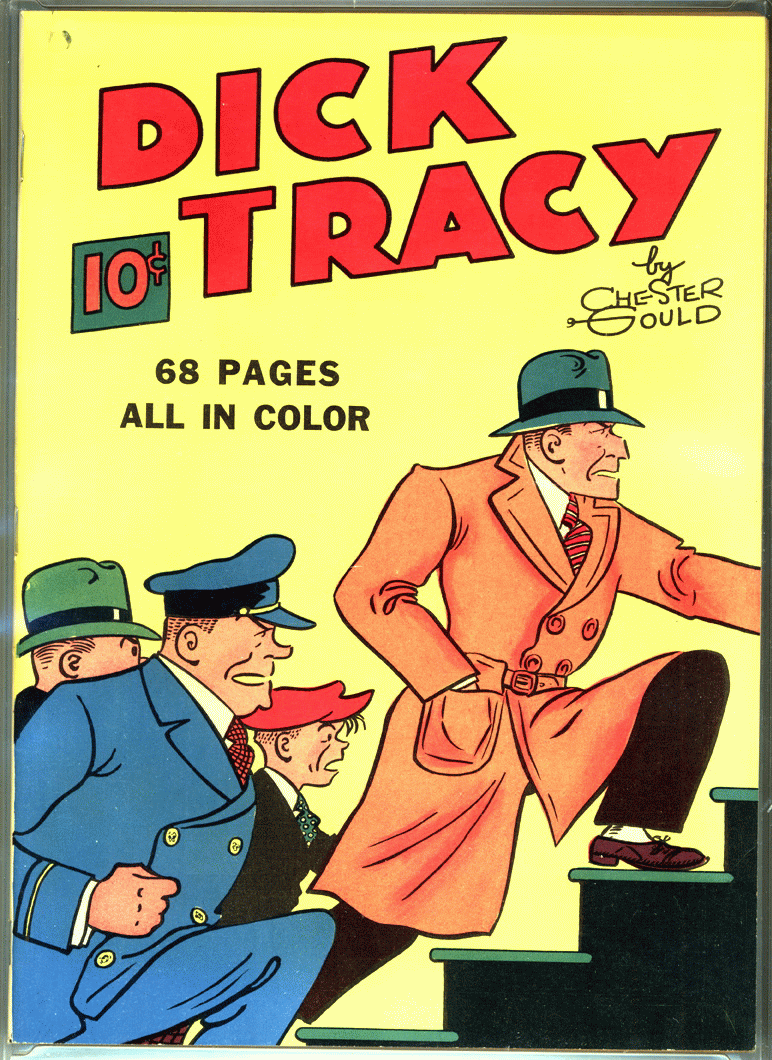 In fall of 1939, Four Color Comics by Dell Publishing would
start. The first issue would feature the famous Dick Tracy and the
series would continue from there. It used very famous characters from
movies, TV shows, cartoons and comic strips. At its peak it during the
1950's new Four Color books was coming out twice a week. Four Color
Volume 1 would last 25 issues, and in 1942 the numbering restarted with
volume 2, #1 stretched 1354 issues! I should add that
sometimes the issues would skip a number. The title ended in 1962 when
Western Printing and Lithographing Co., decided to cut out Dell and
publish themselves through the name of Gold Key. They would later
publish under the name of Whitman which was known for coloring books.
In fall of 1939, Four Color Comics by Dell Publishing would
start. The first issue would feature the famous Dick Tracy and the
series would continue from there. It used very famous characters from
movies, TV shows, cartoons and comic strips. At its peak it during the
1950's new Four Color books was coming out twice a week. Four Color
Volume 1 would last 25 issues, and in 1942 the numbering restarted with
volume 2, #1 stretched 1354 issues! I should add that
sometimes the issues would skip a number. The title ended in 1962 when
Western Printing and Lithographing Co., decided to cut out Dell and
publish themselves through the name of Gold Key. They would later
publish under the name of Whitman which was known for coloring books.