Newsstand Period 1922 - 1955
 Also in January of 1940 Gaines
All American Comics Company got into the superhero business. Flash Comics #1 would debut 3 successful
heroes. Those heroes were The Flash, Hawkman and Johnny Thunder. As a result, a lot more super heroes were created. In All American Comics
Green Lantern would debut in #16,
The
Atom in #19 and Dr. Mid-Nite in #25.
In Adventure Comics appeared The
Hourman
in #48 and
Starman in #61. The Sandman also was a regular feature
from #40 on. More Fun Comics also contributed a number of them.
In #52
The Spectre appeared, #55 had Dr. Fate,
#71 had
Johnny Quick,
#73 had Aquaman and Green Arrow
and #101
had Superboy. Most of these heroes are still appearing in comics today.
Also in January of 1940 Gaines
All American Comics Company got into the superhero business. Flash Comics #1 would debut 3 successful
heroes. Those heroes were The Flash, Hawkman and Johnny Thunder. As a result, a lot more super heroes were created. In All American Comics
Green Lantern would debut in #16,
The
Atom in #19 and Dr. Mid-Nite in #25.
In Adventure Comics appeared The
Hourman
in #48 and
Starman in #61. The Sandman also was a regular feature
from #40 on. More Fun Comics also contributed a number of them.
In #52
The Spectre appeared, #55 had Dr. Fate,
#71 had
Johnny Quick,
#73 had Aquaman and Green Arrow
and #101
had Superboy. Most of these heroes are still appearing in comics today.
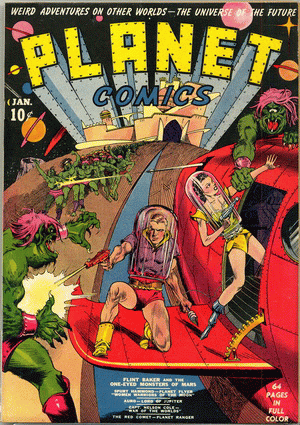 Not all publishers were doing
superheroes. Fiction House came out
Planet Comics #1 in January of 1940. This comic showed the industry
that readers also liked typical sci-fi stories with spaceships, ray
guns and gross looking aliens out to invade planet earth. This would
be the first newsstand comic to devote itself to Sci-Fi stories. In
later years when superheroes were out of flavour Sci-Fi became a
popular genre. Fiction House would also put out Jungle Comics and
Fight
Comics in the same month.
Not all publishers were doing
superheroes. Fiction House came out
Planet Comics #1 in January of 1940. This comic showed the industry
that readers also liked typical sci-fi stories with spaceships, ray
guns and gross looking aliens out to invade planet earth. This would
be the first newsstand comic to devote itself to Sci-Fi stories. In
later years when superheroes were out of flavour Sci-Fi became a
popular genre. Fiction House would also put out Jungle Comics and
Fight
Comics in the same month.
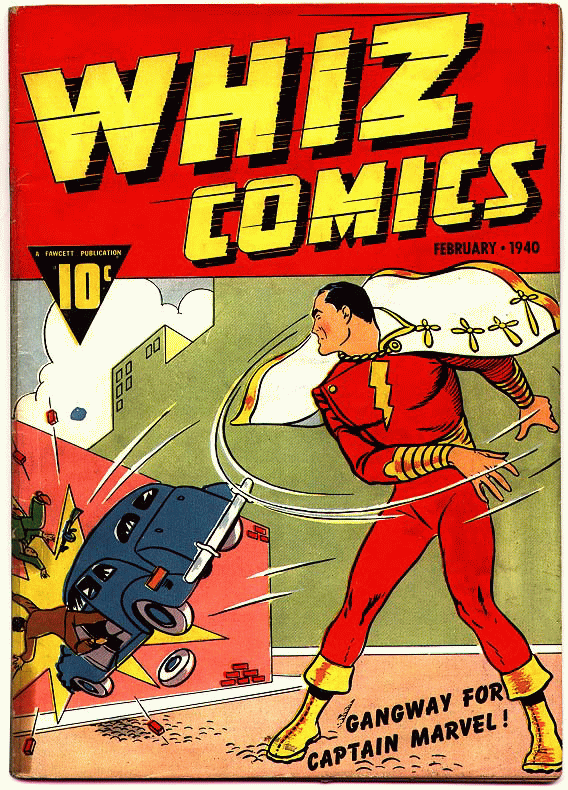
 In February of 1940, Fawcett Comics would burst on the market
with Whiz Comics #2 (there was no #1 issue). This character would
feature a variety of heroes both super and normal. All of them would
end up getting their own dedicated comic book title. This is the only comic
book to have that level of success. The most well known and popular of
these characters would be it’s lead feature Captain Marvel. The
character was created by Bill Parker and Charles Clarence Beck (better
known as C.C. Beck.) This hero was a little boy named Billy Batson whom
after saying the magic word Shazam he would turn into a full fledge
adult with big muscles and super powers. Shazam stood for the mythological
characters that he got his powers from.
In February of 1940, Fawcett Comics would burst on the market
with Whiz Comics #2 (there was no #1 issue). This character would
feature a variety of heroes both super and normal. All of them would
end up getting their own dedicated comic book title. This is the only comic
book to have that level of success. The most well known and popular of
these characters would be it’s lead feature Captain Marvel. The
character was created by Bill Parker and Charles Clarence Beck (better
known as C.C. Beck.) This hero was a little boy named Billy Batson whom
after saying the magic word Shazam he would turn into a full fledge
adult with big muscles and super powers. Shazam stood for the mythological
characters that he got his powers from.
- Solomon - Wisdom
- Hercules - Strength
- Atlas - Stamina
- Zeus - Power
- Achilles - Courage
- Mercury - Speed
 The creators would tap into every boy’s dream and the comic would
be rewarded with high sales. Captain Marvel even surpassed Superman in
sales. The character was originally going to be a group of heroes each
with an individual power but the publisher of Fawcett, Ralph Daigh
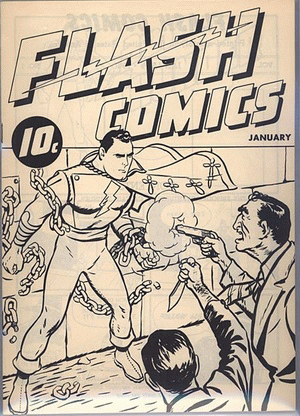
wanted to merge them into one character. Captain Marvel was also
going to be called Captain Thunder and the comic would be Flash
Comics, but Fawcett discovered that other comic publishers already
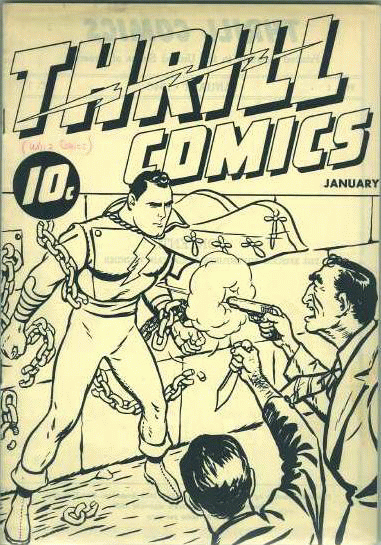
owned the trademarks on those names. Instead they made an ashcan (a
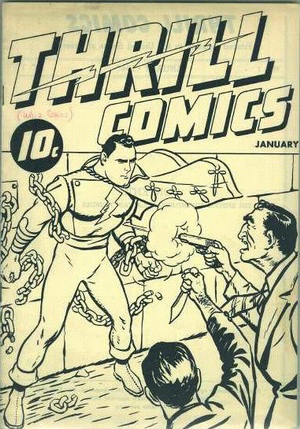
small black and white comic) called Thrill Comics #1 with the Captain
Thunder character in it and used it to register the trademark with the
government. They discovered another publisher was doing Thrilling Comics
and decided to change it to Whiz. Physically the character was based on
actor Fred MacMurray. When Editor / Writer Bill Parker joined the army
the writing duties would be given to Otto Binder, a noted Science
Fiction author at the time. He would go on to write most of the Captain
Marvel stories and create many of the more memorable stories and
villains.
The creators would tap into every boy’s dream and the comic would
be rewarded with high sales. Captain Marvel even surpassed Superman in
sales. The character was originally going to be a group of heroes each
with an individual power but the publisher of Fawcett, Ralph Daigh
wanted to merge them into one character. Captain Marvel was also
going to be called Captain Thunder and the comic would be Flash
Comics, but Fawcett discovered that other comic publishers already
owned the trademarks on those names. Instead they made an ashcan (a
small black and white comic) called Thrill Comics #1 with the Captain
Thunder character in it and used it to register the trademark with the
government. They discovered another publisher was doing Thrilling Comics
and decided to change it to Whiz. Physically the character was based on
actor Fred MacMurray. When Editor / Writer Bill Parker joined the army
the writing duties would be given to Otto Binder, a noted Science
Fiction author at the time. He would go on to write most of the Captain
Marvel stories and create many of the more memorable stories and
villains.
 C.C. Beck would eventually
have to create a comic shop as the
demand for Captain Marvel stories increased. Among the first hires
would be Pete Constanza who assisted Beck and did the majority of the
work on Captain Marvel stories. Different about this series was the light
hearted nature of the art and stories. The artwork had a smooth cartoon
like style to them. They were simple and fun to read. Helping along
with that were the stories that didn’t take themselves seriously.
Villains would often call Captain Marvel "The Big Red Cheese" but he
didn’t mind. That’s when Captain Marvel was in the stories at all, most
of the time the plot was centered on Billy Batson with Captain Marvel
being the climax of the story. The villains were quite unique as well.
While most heroes battled gangsters of sorts, Captain Marvel fought a
talking worm named Mr. Mind with super intellect. With Captain Marvel
doing so well, Fawcett did spin offs of the character. Out came
Captain
Marvel Jr. who was often drawn by Emanuel "Mac" Raboy a slow and
meticulous artist. He was hired away from the Chesler comic shop, who
was doing some other Fawcett material at the time. Raboy was also a
serious woodcut artist, having pieces in Metropolitan Museum of Art.
Other "Marvel" characters include
Mary Marvel (a female version of
Captain Marvel) Uncle Marvel (a powerless old fat man in a Marvel suit,
played for laughs) and Hoppy the Marvel Bunny (a talking superhero
rabbit). The other characters from Whiz Comics #2 to get their own
series were: Ibis the Invincible, Golden Arrow, Spy Smasher, Scoop
Smith, Lance O’ Casey and Dan Dare.
C.C. Beck would eventually
have to create a comic shop as the
demand for Captain Marvel stories increased. Among the first hires
would be Pete Constanza who assisted Beck and did the majority of the
work on Captain Marvel stories. Different about this series was the light
hearted nature of the art and stories. The artwork had a smooth cartoon
like style to them. They were simple and fun to read. Helping along
with that were the stories that didn’t take themselves seriously.
Villains would often call Captain Marvel "The Big Red Cheese" but he
didn’t mind. That’s when Captain Marvel was in the stories at all, most
of the time the plot was centered on Billy Batson with Captain Marvel
being the climax of the story. The villains were quite unique as well.
While most heroes battled gangsters of sorts, Captain Marvel fought a
talking worm named Mr. Mind with super intellect. With Captain Marvel
doing so well, Fawcett did spin offs of the character. Out came
Captain
Marvel Jr. who was often drawn by Emanuel "Mac" Raboy a slow and
meticulous artist. He was hired away from the Chesler comic shop, who
was doing some other Fawcett material at the time. Raboy was also a
serious woodcut artist, having pieces in Metropolitan Museum of Art.
Other "Marvel" characters include
Mary Marvel (a female version of
Captain Marvel) Uncle Marvel (a powerless old fat man in a Marvel suit,
played for laughs) and Hoppy the Marvel Bunny (a talking superhero
rabbit). The other characters from Whiz Comics #2 to get their own
series were: Ibis the Invincible, Golden Arrow, Spy Smasher, Scoop
Smith, Lance O’ Casey and Dan Dare.
Fawcett Publications was a family company. It was owned by
Wilford H. "Billy" Fawcett but his sons Roger, Buzz, Gordon and Rosco
K. Fawcett also worked in it as well. Wilford started his Fawcett publishing empire with a raunchy
joke magazine called Captain Billy’s Whiz-Bang in 1919. Just shortly after Whiz
Comics #2 came out Wilford died on Feb. 7th of 1940. From there the
sons took over the company. Both Bill Parker and C. C. Beck were on
staff as editor and artists which is why they were chosen to start up
the comic book line. Captain Marvel would become the best selling
Superhero comic in this era, but this did not sit well with Superman’s
owners. By 1941 National would sue Fawcett saying Captain Marvel was an
infringement on their trademarked Superman character. National’s case
was that Captain Marvel had essentially the same powers and the same
idea for a villain. Fawcett’s Dr. Sivana was a bald mad scientist, as
was Lex Luthor. Both debuting issues show the hero with a car over
their heads. National also said that elements in their Superman stories
would soon show up in Captain Marvel stories. C. C. Beck strongly
disagree’s with the last argument as he didn’t even like superhero
comic books and did not read them. When he was first told to do a
superhero comic he read some and hated them, thinking that they were of
bad quality. He was very proud about Captain Marvel’s art and
storytelling style being different and was disappointed when other
artists outside of his shop copied what was being done in other comics.
That said, according to Rosco Fawcett one of the artists working on
Captain Marvel traced some Superman drawings and inserted Captain
Marvel in place of Superman. When that came out in court it was very
difficult to defend the infringement case. Faced with a possibility of
having to pay National all the profits they made on Captain Marvel
since Whiz Comics #2, they opted to settle out of court in 1953 for
$400,000 and to promise to never publish the character again. Later
National would hire some of the people that worked on Captain Marvel
and put them on Superman. They would also get the license to the
Captain Marvel characters and eventually buy him outright. Today the
character makes regular appearances under DC, but has only a shadow of his
former popularity.
 Also in January of 1940 Gaines
All American Comics Company got into the superhero business. Flash Comics #1 would debut 3 successful
heroes. Those heroes were The Flash, Hawkman and Johnny Thunder. As a result, a lot more super heroes were created. In All American Comics
Green Lantern would debut in #16,
The
Atom in #19 and Dr. Mid-Nite in #25.
In Adventure Comics appeared The
Hourman
in #48 and
Starman in #61. The Sandman also was a regular feature
from #40 on. More Fun Comics also contributed a number of them.
In #52
The Spectre appeared, #55 had Dr. Fate,
#71 had
Johnny Quick,
#73 had Aquaman and Green Arrow
and #101
had Superboy. Most of these heroes are still appearing in comics today.
Also in January of 1940 Gaines
All American Comics Company got into the superhero business. Flash Comics #1 would debut 3 successful
heroes. Those heroes were The Flash, Hawkman and Johnny Thunder. As a result, a lot more super heroes were created. In All American Comics
Green Lantern would debut in #16,
The
Atom in #19 and Dr. Mid-Nite in #25.
In Adventure Comics appeared The
Hourman
in #48 and
Starman in #61. The Sandman also was a regular feature
from #40 on. More Fun Comics also contributed a number of them.
In #52
The Spectre appeared, #55 had Dr. Fate,
#71 had
Johnny Quick,
#73 had Aquaman and Green Arrow
and #101
had Superboy. Most of these heroes are still appearing in comics today.