Newsstand Period 1922 - 1955
 Harvey Comics was a publisher that put out a wide variety of material
including horror and crime comics. They decided to try licensed cartoon based comics for young kids.
Harvey bought the comic book rights to Paramount Cartoon Characters from St. Johns Publishing.
Among the characters they got was Casper The Friendly Ghost and Little Audrey.
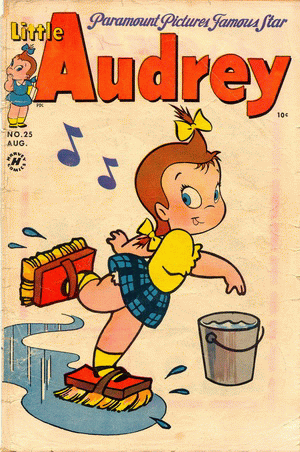
With issue #25 (August 1952) Harvey Comics took over the Little Audrey comic book. This book would
start their popular animation influence style of comics. They would standardize the look of the titles and create
a bunch of popular new characters to go with the ones they got the rights to. Inside are 2 Little Audrey stories
and 1 story each of Casper, Baby Huey, Herman and Buzzy.
The comic is uncredited, but it was drawn by animator/artist Steve Muffatti.
Sadly Muffatti is not well known for his work in comics. He started the kid friendly animated style for Harvey Comics,
which Warren Kremer later refined. This style remained popular and sustained Harvey comics until the mid 1980s.
Muffatti also worked on the animated Superman cartoons done by Fleischer Studios in the 1940s, streamlining Superman's costume and several key characters.
Harvey Comics was a publisher that put out a wide variety of material
including horror and crime comics. They decided to try licensed cartoon based comics for young kids.
Harvey bought the comic book rights to Paramount Cartoon Characters from St. Johns Publishing.
Among the characters they got was Casper The Friendly Ghost and Little Audrey.
With issue #25 (August 1952) Harvey Comics took over the Little Audrey comic book. This book would
start their popular animation influence style of comics. They would standardize the look of the titles and create
a bunch of popular new characters to go with the ones they got the rights to. Inside are 2 Little Audrey stories
and 1 story each of Casper, Baby Huey, Herman and Buzzy.
The comic is uncredited, but it was drawn by animator/artist Steve Muffatti.
Sadly Muffatti is not well known for his work in comics. He started the kid friendly animated style for Harvey Comics,
which Warren Kremer later refined. This style remained popular and sustained Harvey comics until the mid 1980s.
Muffatti also worked on the animated Superman cartoons done by Fleischer Studios in the 1940s, streamlining Superman's costume and several key characters.
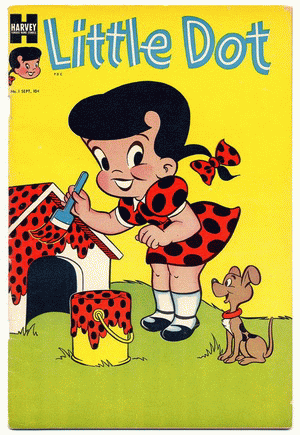 Harvey would also use an existing character with their new kids
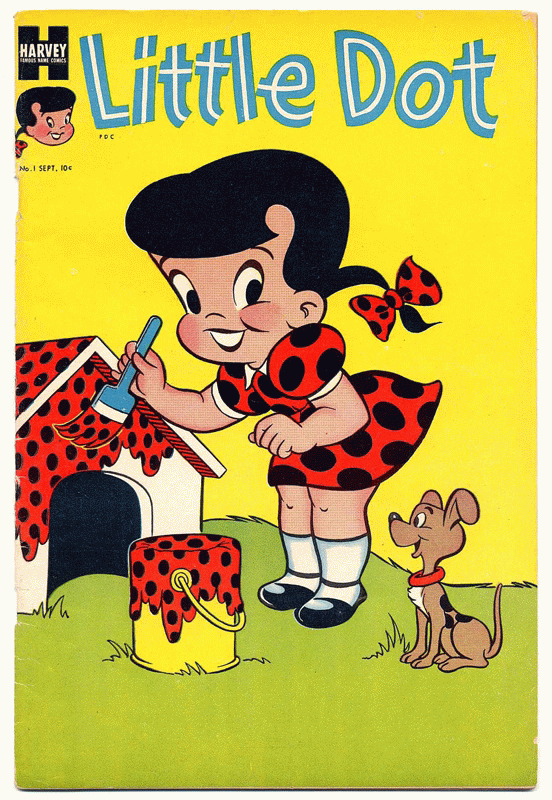
line. Little Dot first appeared in Sad Sack Comics #1
(published in 1949). She was created by writer/artist Vic Herman. When
she got her own series in 1953 she shared the spotlight in her first
issue with Little Lotta and Richie Rich. Little Dot's own series would
go until 1976. Little Lotta would grow popular enough to get her own
series that would last almost 20 years. Richie Rich was undoubtedly the most popular of the
characters. He had over 40 different titles devoted to him and his
cast of characters like his dog Dollar, Cadbury the Butler and his girl friend
Gloria. At one point in the 1970s Richie was in 32 different ongoing titles at the same time! The titles
were released on a monthly or bi-monthly schedule. He would also have a couple of animated series and a
movie.
Harvey would also use an existing character with their new kids
line. Little Dot first appeared in Sad Sack Comics #1
(published in 1949). She was created by writer/artist Vic Herman. When
she got her own series in 1953 she shared the spotlight in her first
issue with Little Lotta and Richie Rich. Little Dot's own series would
go until 1976. Little Lotta would grow popular enough to get her own
series that would last almost 20 years. Richie Rich was undoubtedly the most popular of the
characters. He had over 40 different titles devoted to him and his
cast of characters like his dog Dollar, Cadbury the Butler and his girl friend
Gloria. At one point in the 1970s Richie was in 32 different ongoing titles at the same time! The titles
were released on a monthly or bi-monthly schedule. He would also have a couple of animated series and a
movie.
Several people have claimed they created Richie Rich over the years.
This includes Harvey's co-owner Alfred Harvey, editor Sid Jacobson and long
time popular Harvey artist Warren Kremer. The characters first appearance
was done by writer by Larz Bourne and artist Steve Muffatti. What's not in doubt is
Kremer's contribution to Harvey Comics success. He would
design the model sheets for all the characters that other artists
had to follow. Kremer along with Ernie Colon, Howard Post (who
created Hot Stuff), Sid Couchy, Steve Muffatti, Marty Taras, Peter
Kuper, and Dom Sileo among others did much of the work on these titles.
They came from an animation background and used simple looking, animated style
artwork to great success.
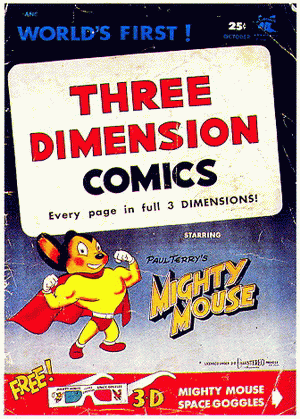 In 1951 artists Joe Kubert, Norman Maurer and Lenny Maurer
returned from Germany after a tour of duty. The three had come in
contact with 3D pictures and learned the method of making 3D things while there. They
used the process on a page of Kubert's Tor work and some 3 Stooges
strips (Norman Maurer was Moe Howards Son-in-Law). While working for
St. John Publishing they showed it to the owner Archer St. John. He
asked if they could use the same process for Mighty Mouse. They said
they could and 72 hours later (and no sleep) they came up with this comic.
Archer thought Mighty Mouse would be the best character to use for the
new technique, figuring the characters fame would help get the book
onto newsstands. Thus on September of 1953, the first 3D Comic was
published. They printed 1.25 million copies of Three Dimension Comics
and they sold out. St. John had to go back to press to print more, the
total sales was 1.5 million.
In 1951 artists Joe Kubert, Norman Maurer and Lenny Maurer
returned from Germany after a tour of duty. The three had come in
contact with 3D pictures and learned the method of making 3D things while there. They
used the process on a page of Kubert's Tor work and some 3 Stooges
strips (Norman Maurer was Moe Howards Son-in-Law). While working for
St. John Publishing they showed it to the owner Archer St. John. He
asked if they could use the same process for Mighty Mouse. They said
they could and 72 hours later (and no sleep) they came up with this comic.
Archer thought Mighty Mouse would be the best character to use for the
new technique, figuring the characters fame would help get the book
onto newsstands. Thus on September of 1953, the first 3D Comic was
published. They printed 1.25 million copies of Three Dimension Comics
and they sold out. St. John had to go back to press to print more, the
total sales was 1.5 million.
Do to the success of the Mighty Mouse 3D, many publishers did 3D
books. After seeing the Mighty Mouse sales
figures St. John Publishing converted an entire floor of a building into an assembly line
to make all their comics 3D regardless of their content. By
the 10th or 11th 3D book, the sales dropped radically to 19% sell
though (meaning the remaining 79% were returned). Another thing around
this time inspiring 3D comics was a 3D Horror movie. The movie was
called House of Wax and it starred Vincent Price. Thanks the magic of
3D people could now see the blood spurting right off the page in
comics like House of Terror done in October of 1953. Over a four month time
period over 30 different 3D comics were done. The 3D fad has come back for brief
periods throughout comic history.
 With the success of ECs MAD many other publishers jumped on the humor/parody
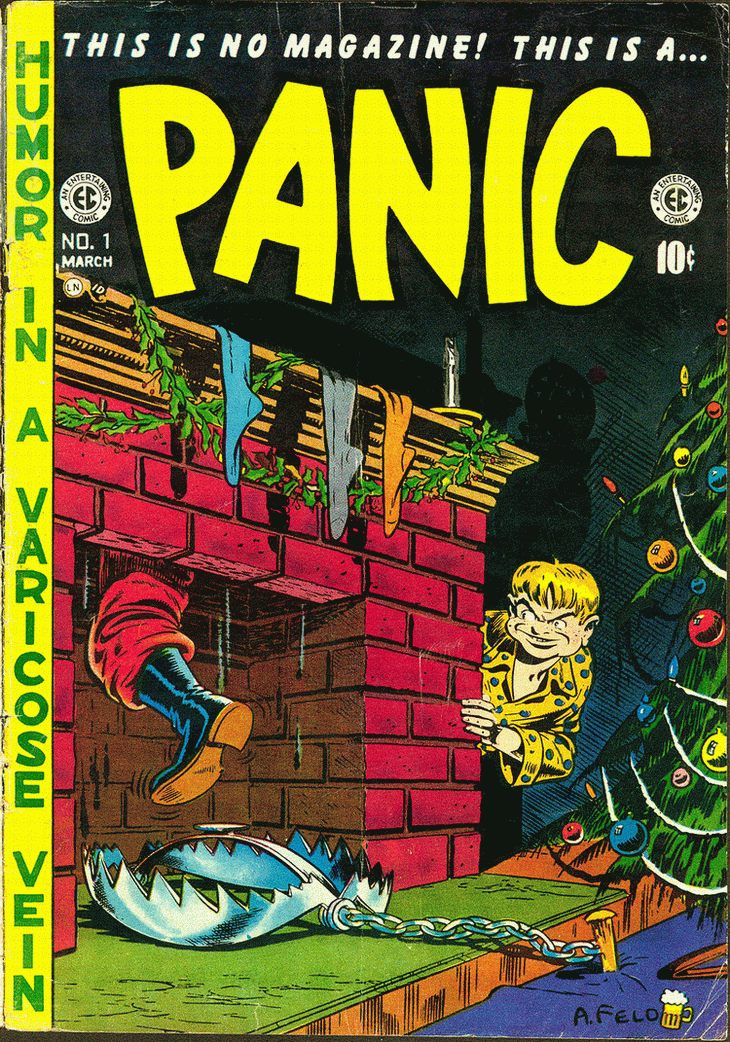
bandwagon. The vast majority of those titles came and went without making much impact. Panic (Feb-1954), also
published by EC, was one book that made big waves. In it were two stories that offended and enraged various
members of the government. The first was a parody of the Night Before Christmas. The 2nd poked fun at
Mickey Spillane's Mike Hammer pulp novels. Panic would also offend politicians in Massachusetts and they banned the comic. State Attorney General George Fingold warned distributors that violating the ban
would lead to criminal prosecution. Gaines responded by restricting distribution of the title from Massachusetts and also announcing he was pulling his Picture
Stories from the Bible from the state as well, but what many didn't realize was the book had been out of print for 5 years. Once the story about this had hit the newspapers, The New York Police
Department went over EC's office to arrest the person in charge. First they got the EC's secretary Shirley Norris to sell them a copy.
At the time Bill Gaines friend Lyle Stuart was there and he knew Bill Gaines could not handle prison with his various medical problems. He had Bill hide
and convinced the police that he was the business manager in charge at EC Comics. The police first brought Stuart Lyle to the
station to arrest him, but then realized he didn't do anything illegal. They then went back and arrested
Shirley Norris because she sold them a copy of the book. The police were super serious and told Norris she could face up to 1 year in prison.
When the case went to trial the charge was quickly dismissed by the Judge. Lyle Stuart and Bill Gaines became life long friends.
Those two stories in Panic #1 would be dissected and displayed for the US Senate hearings on comic books and juvenile delinquency.
Panic would only go 12 issues.
With the success of ECs MAD many other publishers jumped on the humor/parody
bandwagon. The vast majority of those titles came and went without making much impact. Panic (Feb-1954), also
published by EC, was one book that made big waves. In it were two stories that offended and enraged various
members of the government. The first was a parody of the Night Before Christmas. The 2nd poked fun at
Mickey Spillane's Mike Hammer pulp novels. Panic would also offend politicians in Massachusetts and they banned the comic. State Attorney General George Fingold warned distributors that violating the ban
would lead to criminal prosecution. Gaines responded by restricting distribution of the title from Massachusetts and also announcing he was pulling his Picture
Stories from the Bible from the state as well, but what many didn't realize was the book had been out of print for 5 years. Once the story about this had hit the newspapers, The New York Police
Department went over EC's office to arrest the person in charge. First they got the EC's secretary Shirley Norris to sell them a copy.
At the time Bill Gaines friend Lyle Stuart was there and he knew Bill Gaines could not handle prison with his various medical problems. He had Bill hide
and convinced the police that he was the business manager in charge at EC Comics. The police first brought Stuart Lyle to the
station to arrest him, but then realized he didn't do anything illegal. They then went back and arrested
Shirley Norris because she sold them a copy of the book. The police were super serious and told Norris she could face up to 1 year in prison.
When the case went to trial the charge was quickly dismissed by the Judge. Lyle Stuart and Bill Gaines became life long friends.
Those two stories in Panic #1 would be dissected and displayed for the US Senate hearings on comic books and juvenile delinquency.
Panic would only go 12 issues.
Behind the Scenes - He loved controversy.
Lyle Stuart was first known for getting into a very public feud with a
powerful 1940s and 50s newspaper columnist Walter Winchell. Bill Gaines would befriend and finance Stuart's Expose
magazine. After Stuart was arrested Winchell wrote "Attention all news stands! Anyone selling the filth
of Lyle Stuart will be subject to the same arrest!" Stuart sued for libel and won. Panic #9 would be a
parody of a magazine called Confidential and would run a picture of Winchell asking "Does Walter Winchell
read Comics?" Stuart used the lawsuit money to start a publishing company. He published zany and sometimes controversial books
that nobody else would touch. Among them: "The Anarchist Cookbook", "The Turner Diaries", "Naked Came the Stranger",
"History Will Absolve Me" (by Fidel Castro), "The Rich and the Super-Rich", "The Sensuous Woman" and "Jackie Oh!"
Lyle was also behind getting Bill Gaines to testify and defend his horror comics at the Senate Hearings.
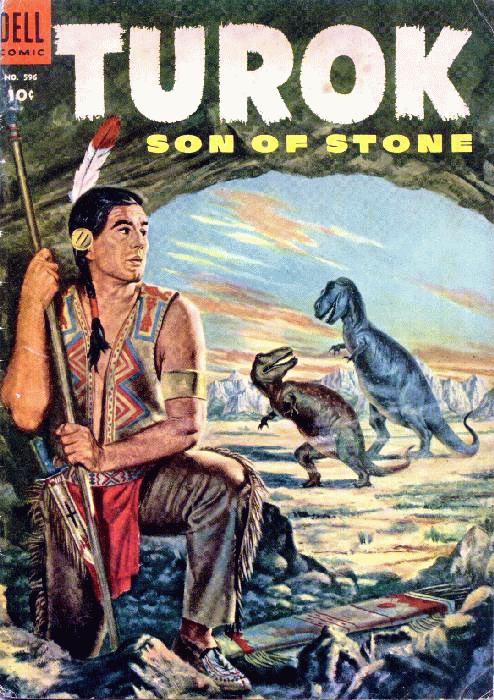
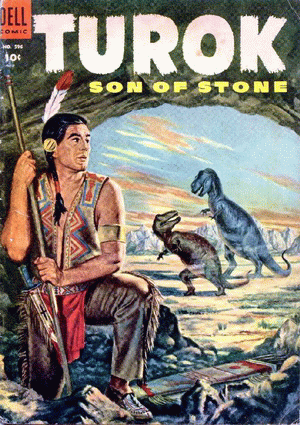 In December of 1954 Dell's Four Color Comics #596 would have the
first appearance of Turok, Son of Stone. The character would appear again
in issue #656 in 1955.
His appearances must have proved popular because in 1956 he got his own series. It started with
issue #3 and it would go
130 issues, ending in 1982. The series would first run quarterly, then go bi-monthly. The character
would be bought by other comic companies in the 90's and brought back on 3 different occasions. Turok
would also be turned into a successful video game. He was one of the very few original characters that
Dell Comics published. Turok is said to be created by Dell editor Matthew H. Murphy. A number of
freelancers worked on the title among them artists Alberto Giolitti and Rex Mason. Writers included
Paul S. Newman and artist Alberto Giolitti is said to have written the first issue. The series was
about pre-Columbus discovered Indians, Turok and Andar, accidentally getting into a valley that still
had Dinosaurs and Cave Men. They were unable to get out of the Valley and spent their time trying to
survive a pre-historic environment.
In December of 1954 Dell's Four Color Comics #596 would have the
first appearance of Turok, Son of Stone. The character would appear again
in issue #656 in 1955.
His appearances must have proved popular because in 1956 he got his own series. It started with
issue #3 and it would go
130 issues, ending in 1982. The series would first run quarterly, then go bi-monthly. The character
would be bought by other comic companies in the 90's and brought back on 3 different occasions. Turok
would also be turned into a successful video game. He was one of the very few original characters that
Dell Comics published. Turok is said to be created by Dell editor Matthew H. Murphy. A number of
freelancers worked on the title among them artists Alberto Giolitti and Rex Mason. Writers included
Paul S. Newman and artist Alberto Giolitti is said to have written the first issue. The series was
about pre-Columbus discovered Indians, Turok and Andar, accidentally getting into a valley that still
had Dinosaurs and Cave Men. They were unable to get out of the Valley and spent their time trying to
survive a pre-historic environment.
 Harvey Comics was a publisher that put out a wide variety of material
including horror and crime comics. They decided to try licensed cartoon based comics for young kids.
Harvey bought the comic book rights to Paramount Cartoon Characters from St. Johns Publishing.
Among the characters they got was Casper The Friendly Ghost and Little Audrey.
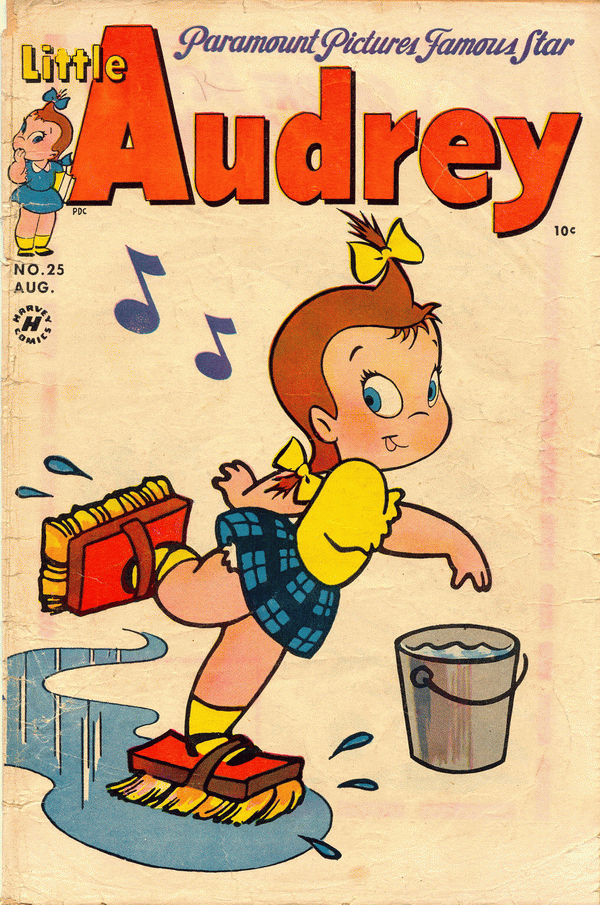
With issue #25 (August 1952) Harvey Comics took over the Little Audrey comic book. This book would
start their popular animation influence style of comics. They would standardize the look of the titles and create
a bunch of popular new characters to go with the ones they got the rights to. Inside are 2 Little Audrey stories
and 1 story each of Casper, Baby Huey, Herman and Buzzy.
The comic is uncredited, but it was drawn by animator/artist Steve Muffatti.
Sadly Muffatti is not well known for his work in comics. He started the kid friendly animated style for Harvey Comics,
which Warren Kremer later refined. This style remained popular and sustained Harvey comics until the mid 1980s.
Muffatti also worked on the animated Superman cartoons done by Fleischer Studios in the 1940s, streamlining Superman's costume and several key characters.
Harvey Comics was a publisher that put out a wide variety of material
including horror and crime comics. They decided to try licensed cartoon based comics for young kids.
Harvey bought the comic book rights to Paramount Cartoon Characters from St. Johns Publishing.
Among the characters they got was Casper The Friendly Ghost and Little Audrey.
With issue #25 (August 1952) Harvey Comics took over the Little Audrey comic book. This book would
start their popular animation influence style of comics. They would standardize the look of the titles and create
a bunch of popular new characters to go with the ones they got the rights to. Inside are 2 Little Audrey stories
and 1 story each of Casper, Baby Huey, Herman and Buzzy.
The comic is uncredited, but it was drawn by animator/artist Steve Muffatti.
Sadly Muffatti is not well known for his work in comics. He started the kid friendly animated style for Harvey Comics,
which Warren Kremer later refined. This style remained popular and sustained Harvey comics until the mid 1980s.
Muffatti also worked on the animated Superman cartoons done by Fleischer Studios in the 1940s, streamlining Superman's costume and several key characters.