Newsstand Period 1922 - 1955
1954 - The year that changed comic books.
 Three very important things happened to the comic book industry
in this year. 1. Public accusations that comic books caused crime rates to go up. 2. The government investigation of
this claim and 3. A new self policing censorship body created by comic publishers. The first would happen in a 1954 best selling book called
Seduction of the Innocent. It's author was
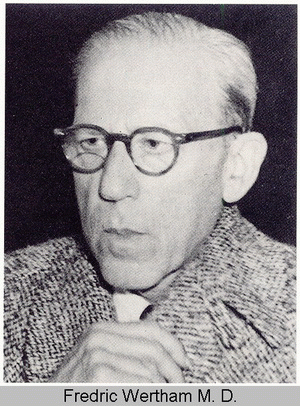
Fredric Wertham M. D., a famous psychologist that was known for helping the government on mental health
issues. Fredric Wertham was born on March 20, 1895 as Frederic Werthheimer in Nuremberg, Germany. He
went to the University of Wurzburg and received his MD in 1921. After a year of post-graduate study he
got a job at the Kraepelin Clinic in Munich. The clinic's founder Emile Kraepelin had the theory that a
patient's environment had to be considered when deciding upon a course of treatment for them. This was
a new idea at the time and it appealed to Fredric. He used it throughout his career as a psychologist.
Three very important things happened to the comic book industry
in this year. 1. Public accusations that comic books caused crime rates to go up. 2. The government investigation of
this claim and 3. A new self policing censorship body created by comic publishers. The first would happen in a 1954 best selling book called
Seduction of the Innocent. It's author was
Fredric Wertham M. D., a famous psychologist that was known for helping the government on mental health
issues. Fredric Wertham was born on March 20, 1895 as Frederic Werthheimer in Nuremberg, Germany. He
went to the University of Wurzburg and received his MD in 1921. After a year of post-graduate study he
got a job at the Kraepelin Clinic in Munich. The clinic's founder Emile Kraepelin had the theory that a
patient's environment had to be considered when deciding upon a course of treatment for them. This was
a new idea at the time and it appealed to Fredric. He used it throughout his career as a psychologist.
In 1922, Wertham moved to the U.S. and got a job at the Phipps
Psychiatric Clinic at the Johns Hopkins University. While there, he wrote his first book titled The
Brain as an Organ which was published in 1926. The theories espoused in this book were different than
those supported by most psychologists at the time. Nevertheless the book went on to become a widely
used medical textbook. Due to this Dr. Wertham would become the first psychiatrist to receive a
National Research Council grant.
In 1932, Wertham left his job at Phipps Psychiatric for one of
the most prestigious posts in the psychiatric field, Senior Psychiatrist at Belleview Hospital in New
York. There, Fredric wrote several articles for psychiatric journals and gained an interest in the
connection between mental health and criminal behavior. He helped the state of New York set up a
psychiatric evaluation for convicted criminals.
Wertham would go on to write two more successful books. 1941's
Dark Legend was a true life story about a 17 year old teenager who killed his mother. 1949's A Show of
Violence was about a number of horrific real life crime cases. Wertham didn't just talk about crime
though, he would give key significant testimony speaking against school segregation to the Delaware
Chancery Court. This testimony was used in the U.S. Supreme Court case of Brown vs. The Board of
Education, resulting in a Supreme Court ruling declaring that racial discrimination in public
schools was unconstitutional.
 Then came Seduction of the Innocent. In previous years there was a
sharp rise in juvenile delinquency and Wertham said "crime" comics were a major contributing factor.
Wertham’s version of "crime" comics included everything but funny animal comics, but he
criticized those too. He also said comic books were influencing kids to become fascists, racists,
sadists, rapists, illiterate and homosexuals. Because comics were being distributed internationally,
the comics books made other countries hate America as well. He insinuated that comic books made kids & future
adults less likely to embrace Democracy which implied they were more likely to embrace Communism. Wertham would also
retell comic book stories using concise descriptions to portray them in the worst possible light. He
would say stories were teaching prejudice against minorities when they unmistakably taught prejudice
was wrong. He "saw" things in
artwork that nobody else did, from assuming women were raped to hidden pictures of naked women within
the art. His research was to interview the juvenile delinquents that he came in contact with
through work and examine comic books with a patently obvious bias. Because of a melodramatic and
sarcastic writing style the book caused outrage against the comic book industry. Some psychologists
like Dr. Frederic M. Thrasher pointed out the flaws in Wertham's research. Wertham was using guilt by
association, because the majority of delinquent children he interviewed read comics books he was
convinced they were responsible for their negative behaviour. He was disregarding that 98% of all
children were reading comic books and only a fraction of them were getting into trouble. He did not
submit his research to any scientific journals for peer review, instead he went through the media to
reach parents. The book very squarely tells parents they are powerless against the comic book industry
and are neither responsible or to blame for their child's reading material or actions. He urges
government to enact legislation to forbid virtually all comic books from even being displayed and
wanted them to be sold only to adults upon request. At the same time he said this was not restricting
free speech. In his condemnation of the comic book industry he ignores Dell Comics, who's popular, licensed
titles were almost half of all comic book sales. Dell produced the most harmless comic books on the newsstands and was by far the most successful publisher of the
industry.
Then came Seduction of the Innocent. In previous years there was a
sharp rise in juvenile delinquency and Wertham said "crime" comics were a major contributing factor.
Wertham’s version of "crime" comics included everything but funny animal comics, but he
criticized those too. He also said comic books were influencing kids to become fascists, racists,
sadists, rapists, illiterate and homosexuals. Because comics were being distributed internationally,
the comics books made other countries hate America as well. He insinuated that comic books made kids & future
adults less likely to embrace Democracy which implied they were more likely to embrace Communism. Wertham would also
retell comic book stories using concise descriptions to portray them in the worst possible light. He
would say stories were teaching prejudice against minorities when they unmistakably taught prejudice
was wrong. He "saw" things in
artwork that nobody else did, from assuming women were raped to hidden pictures of naked women within
the art. His research was to interview the juvenile delinquents that he came in contact with
through work and examine comic books with a patently obvious bias. Because of a melodramatic and
sarcastic writing style the book caused outrage against the comic book industry. Some psychologists
like Dr. Frederic M. Thrasher pointed out the flaws in Wertham's research. Wertham was using guilt by
association, because the majority of delinquent children he interviewed read comics books he was
convinced they were responsible for their negative behaviour. He was disregarding that 98% of all
children were reading comic books and only a fraction of them were getting into trouble. He did not
submit his research to any scientific journals for peer review, instead he went through the media to
reach parents. The book very squarely tells parents they are powerless against the comic book industry
and are neither responsible or to blame for their child's reading material or actions. He urges
government to enact legislation to forbid virtually all comic books from even being displayed and
wanted them to be sold only to adults upon request. At the same time he said this was not restricting
free speech. In his condemnation of the comic book industry he ignores Dell Comics, who's popular, licensed
titles were almost half of all comic book sales. Dell produced the most harmless comic books on the newsstands and was by far the most successful publisher of the
industry.
 The public believed Wertham's study and reacted with fear and anger. For years parents let
their children read comic books without checking them, thinking they all had wholesome material.
They were quite
surprised that comic books had gruesome, violent crime and horror stories aimed in part at adult
readers. Parents were also afraid about what Wertham was saying, that the comic books could turn their
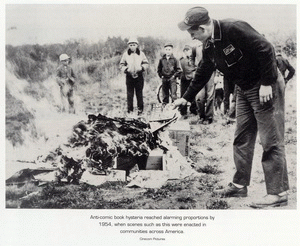
children into little monsters. And so the public reacted. Newsstand dealers selling objectionable comics were given
a hard time and were boycotted. A few communities even went so far as to round up all the local comic books and
burn them. This burning pictured here occurred in Nebraska in this year. With all this turmoil, the Government took notice.
The public believed Wertham's study and reacted with fear and anger. For years parents let
their children read comic books without checking them, thinking they all had wholesome material.
They were quite
surprised that comic books had gruesome, violent crime and horror stories aimed in part at adult
readers. Parents were also afraid about what Wertham was saying, that the comic books could turn their
children into little monsters. And so the public reacted. Newsstand dealers selling objectionable comics were given
a hard time and were boycotted. A few communities even went so far as to round up all the local comic books and
burn them. This burning pictured here occurred in Nebraska in this year. With all this turmoil, the Government took notice.
 Three very important things happened to the comic book industry
in this year. 1. Public accusations that comic books caused crime rates to go up. 2. The government investigation of
this claim and 3. A new self policing censorship body created by comic publishers. The first would happen in a 1954 best selling book called
Seduction of the Innocent. It's author was
Fredric Wertham M. D., a famous psychologist that was known for helping the government on mental health
issues. Fredric Wertham was born on March 20, 1895 as Frederic Werthheimer in Nuremberg, Germany. He
went to the University of Wurzburg and received his MD in 1921. After a year of post-graduate study he
got a job at the Kraepelin Clinic in Munich. The clinic's founder Emile Kraepelin had the theory that a
patient's environment had to be considered when deciding upon a course of treatment for them. This was
a new idea at the time and it appealed to Fredric. He used it throughout his career as a psychologist.
Three very important things happened to the comic book industry
in this year. 1. Public accusations that comic books caused crime rates to go up. 2. The government investigation of
this claim and 3. A new self policing censorship body created by comic publishers. The first would happen in a 1954 best selling book called
Seduction of the Innocent. It's author was
Fredric Wertham M. D., a famous psychologist that was known for helping the government on mental health
issues. Fredric Wertham was born on March 20, 1895 as Frederic Werthheimer in Nuremberg, Germany. He
went to the University of Wurzburg and received his MD in 1921. After a year of post-graduate study he
got a job at the Kraepelin Clinic in Munich. The clinic's founder Emile Kraepelin had the theory that a
patient's environment had to be considered when deciding upon a course of treatment for them. This was
a new idea at the time and it appealed to Fredric. He used it throughout his career as a psychologist.
